How to Get Featured on Business Insider in 2026
Quick answer: Getting featured on Business Insider usually requires a genuinely newsworthy story, strong evidence, and a clean pitch or distribution plan. You cannot simply buy editorial credibility, but you can improve your odds by matching your announcement to what journalists actually cover. Press releases can help create visibility and syndication, yet the story itself still does the heavy lifting.
Why Business Insider coverage is hard to win
 Business Insider is a high-authority publication with serious competition for attention. Similarweb reports 67.8 million visits, while Semrush reported 48.94 million visits in May 2026 and an average session duration of 4 minutes 56 seconds, which tells you readers are not merely popping in for a biscuit and leaving.
The publication also carries strong SEO weight. Sitestatsdb reports roughly 45.85 million organic Google visitors in June 2026 and an Ahrefs Domain Rating of 92, so brands naturally want the credibility, referral traffic, and citation potential that can come with being mentioned there.
- Journalists receive far more pitches than they can use
- Most company announcements are interesting only to the company
- Weak evidence, vague claims, and salesy language kill momentum quickly
What counts as a Business Insider-worthy story
 Newsworthiness is the entry ticket. Business Insider is more likely to notice a story when it reflects a trend, reveals data, explains a market shift, or gives readers a sharp angle on money, work, tech, retail, startups, or consumer behaviour.
A press release is not the story by itself. The release is the packaging, while the actual asset is the evidence, timing, and point of view behind it.
A strong angle usually includes one of these ingredients:
- New data from your customers, product usage, or industry survey
- Clear traction such as revenue growth, hiring, expansion, funding, or partnerships
- A timely hook tied to regulation, AI, inflation, jobs, creator economy shifts, or sector-specific change
- A contrarian insight that challenges an accepted narrative with proof
Founders often confuse announcements with relevance. “We launched a feature” is rarely enough, but “our customers changed behaviour by 38% after a new regulation” is much more useful to a reporter.
| Weak angle | Stronger angle |
|---|---|
| We launched a new platform | New platform helped users cut onboarding time by 42% across 1,200 accounts |
| Our company is growing | Revenue grew 3x year on year after a specific market shift |
| We are excited to announce | Survey of 500 buyers shows a trend journalists can cite |
How to build a story journalists can actually use
 Usability matters as much as originality. If a journalist has to excavate the facts with a tiny brush and a great deal of patience, your pitch will probably die in the inbox.
Your job is to make publication easy. That means a clear headline, a sharp peg, supporting proof, quotable commentary, and assets that save time.
Here is the practical checklist:
- Write a one-line story summary that explains what happened and why it matters now.
- Lead with the strongest fact such as a percentage increase, funding figure, dataset size, or market signal.
- Add one useful executive quote with substance, not theatre.
- Include source material like screenshots, charts, product images, founder bio, or report methodology.
- Link to the right landing page so readers and journalists can verify the claim.
Good media materials remove friction. If you need help shaping the release itself, BrandPush has a practical press release writing guide and a useful guide to creating the perfect press release headline.
Choose the right route: direct pitching, PR distribution, or both
 There is more than one path to Business Insider visibility. The sensible route depends on whether you have a journalist-worthy exclusive, a broader announcement, or both.
Direct pitching works best for tailored editorial angles. If you have exclusive data, a founder story, or a trend tied to a specific beat, you should pitch relevant journalists directly with a concise note and one clear reason the story matters.
Distribution works best for reach, discoverability, and syndication. A distributed release can create momentum across many outlets, help your announcement surface in search, and give reporters something structured to reference.
| Route | Best for | Main limitation |
|---|---|---|
| Direct journalist pitch | Exclusives, commentary, data stories | Time-intensive and no guaranteed pickup |
| Press release distribution | Broad visibility, searchable coverage, credibility signals | Distribution alone does not create editorial interest |
| Combined approach | Launches with both scale and a tailored media angle | Requires better prep and timing |
Most brands should use a combined approach. Send a polished release through a credible platform, then pitch the strongest angle separately to relevant journalists while the announcement is fresh.
For teams that want a done-for-you option, BrandPush can help distribute a business announcement across major outlets and broader media networks, which is useful when you need speed, clean formatting, and a credible launch footprint.
Time your announcement like a grown-up
 Timing changes outcomes more than many brands realise. A mediocre story sent at the right moment can outperform a decent story launched on a holiday Friday afternoon, which is where good announcements go to have a quiet lie-down.
Journalists care about context and timing. Your release or pitch should connect to something current, measurable, and relevant to the audience that publication serves.
Use this timing framework:
- Before a launch: Prepare assets, landing page, quote approval, and proof points
- During a trend spike: Tie your data or announcement to an existing conversation
- Early in the week: Tuesday to Thursday often gives better newsroom visibility
- Early in the day: Send when inboxes are busy but not collapsing under the weight of lunch
Embargoes can help when the story is strong enough. If you are offering data or a serious company development, an embargoed pitch can give a journalist time to assess the material properly rather than skimming it between twelve other emails and a coffee stain.
Set realistic expectations on cost and outcomes
 Getting featured on Business Insider is not a fixed-price vending machine transaction. Costs depend on whether you are investing in story development, assets, outreach, and distribution rather than purchasing some mystical button labelled “prestige”.
Distribution pricing across the market varies wildly. A 2026 pricing guide states press release distribution can range from about $49 to $5,000 per release, with many businesses spending $49 to $800 depending on reach and add-ons, according to PRGun.
Legacy provider pricing is often much higher. According to Prezly’s summary of public pricing, one major wire lists state or local distribution at $350, national at $805, social add-ons at $880, and premium options from $1,500 to $8,700.
Expensive does not automatically mean newsworthy. If the underlying announcement is weak, no package, software stack, or very earnest PDF will save it.
A sensible budget usually covers:
- Story development or PR support
- Release writing and editing
- Distribution fees
- Visual assets or data design
- Follow-up outreach to selected journalists
Outcomes should be judged on more than one metric. Useful measures include referral traffic, branded search lift, lead quality, coverage quality, republishing, and whether journalists or AI answer engines start citing your brand.
One 2026 campaign case study reported 1.2 million impressions, a 220% increase in organic traffic, and lead growth after a press release campaign, according to Media Exposure Hub. That is a case study, not universal law, but it shows why distribution can matter when the story and follow-through are sound.
Common mistakes that stop brands getting picked up
 Most failed media pushes are boring before they are unlucky. Brands often blame timing, algorithms, or journalists, when the real issue is that the material does not contain a story another human would repeat.
The usual mistakes are fixable. That is the good news, unless you were hoping the fix would be “do nothing differently” 😅
- Writing a headline that sounds like internal corporate wallpaper
- Leading with adjectives instead of facts
- Offering no numbers, no evidence, and no supporting assets
- Pitching a broad consumer story to a niche business reporter
- Sending the same template to everyone with no relevance
- Expecting distribution alone to create editorial coverage
Clarity beats hype every time. If your release still sounds inflated after a ruthless edit, it probably needs more substance, not more adjectives.
If you want a practical sense-check, the BrandPush help centre also covers 14 common mistakes to avoid in your press release.
A simple 7-day plan to improve your chances
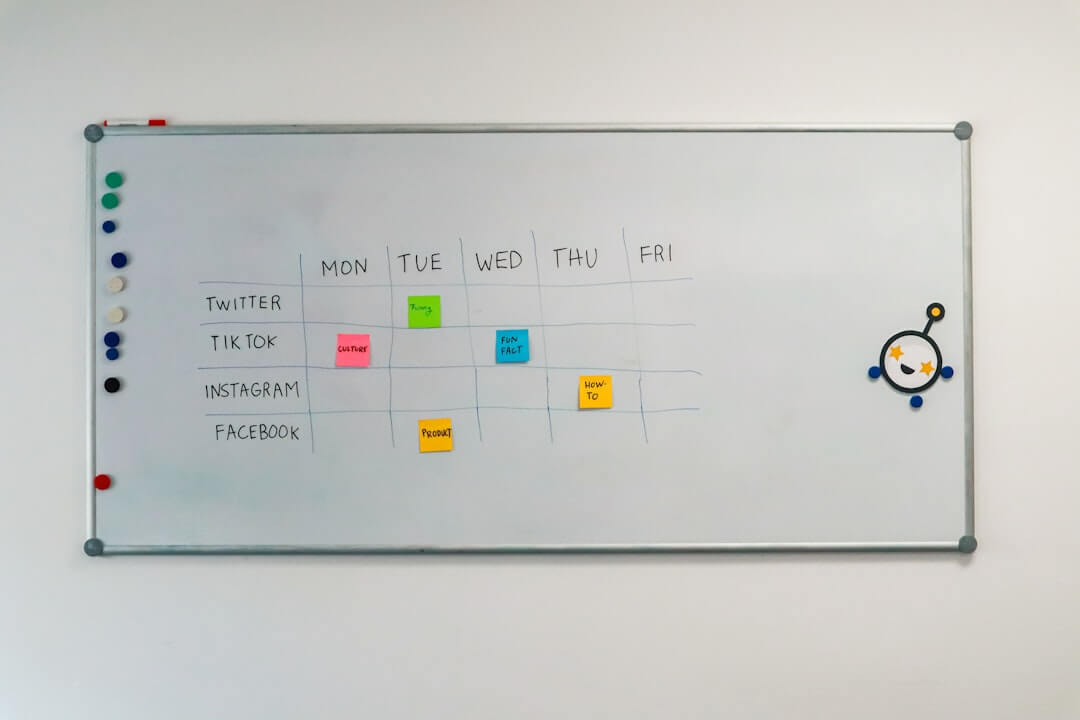 You do not need a sprawling PR circus to get organised. You need one week of disciplined preparation and a story with actual teeth.
This plan keeps the process focused. It is especially useful for startups, e-commerce brands, agencies, SaaS teams, and founders who need traction without turning the launch into interpretive dance.
| Day | Action | Goal |
|---|---|---|
| 1 | Define the story angle and audience | One clear news hook |
| 2 | Gather proof, numbers, visuals, and quote | Supporting evidence |
| 3 | Draft release and landing page | Publishable assets |
| 4 | Build shortlist of relevant journalists | Targeted outreach |
| 5 | Final edit, headline polish, fact-check | Reduce friction |
| 6 | Distribute release and send pitches | Create launch momentum |
| 7 | Follow up selectively and monitor results | Improve pickup odds |
The follow-up matters more than people think. One useful nudge with an extra data point is professional, while six “just checking in” emails in a day is a cry for help.
If your team wants a smoother workflow, use a service that handles the formatting and distribution properly. That frees you to focus on angle, proof, and outreach, which is where the real battle is won 🙂
Getting featured on Business Insider is about fit, timing, and evidence, not wishful thinking. A strong story, a journalist-friendly pitch, and sensible distribution can materially improve your odds, but no serious publication owes your brand attention. For businesses that want wider announcement visibility while they pitch sharper editorial angles, BrandPush is a practical way to support the process without overcomplicating it.
Frequently Asked Questions
Can you pay Business Insider directly to feature your company?
Business Insider has advertising and sponsored content options, but editorial coverage is separate from paid promotion. If you want earned coverage, you need a story that matches editorial standards.
Does a press release guarantee Business Insider coverage?
No, a press release does not guarantee coverage on Business Insider. It can improve visibility, create searchable coverage, and make your announcement easier to reference, but editorial pickup still depends on news value.
What kind of businesses get featured on Business Insider?
Startups, tech firms, finance brands, e-commerce businesses, consumer companies, and founders with strong data or trend-led stories often fit well. The key factor is not company size alone, but whether the story is useful and timely.
Is Business Insider good for SEO?
Business Insider is attractive from an SEO perspective because it has strong authority signals, including a reported Domain Rating of 92. That said, the biggest value often comes from credibility, branded search, referral traffic, and secondary pickup rather than chasing a single link.
How long does it take to get featured on Business Insider?
There is no fixed timeline because editorial decisions vary by story, journalist, and timing. Some stories get attention within days, while others never land despite solid preparation.
Should I pitch journalists directly or use distribution first?
The best approach is often both. Use direct pitching for tailored editorial relevance, and use distribution to give the announcement broader visibility and a structured footprint.
What should I include in a pitch to Business Insider?
Keep it concise and specific. Lead with the story angle, why it matters now, one or two hard facts, and a clear offer such as data, interview access, or supporting material.
What makes a story more likely to be picked up?
Original data, clear traction, market relevance, and strong timing all help. Journalists are far more likely to engage when the material offers something readers can learn from or cite immediately.