Do Press Release Distribution Services Still Work in 2026?
Quick answer: Press release distribution services still work in 2026, but not for the reasons many brands assume. They are most useful for visibility, credibility, searchable brand mentions, and republishing across media networks, not as a magic button for guaranteed editorial fame or instant rankings.
Why brands still use press release distribution services
 Distribution still solves a real visibility problem. Most brands do not fail because they lack a story, but because their announcement never reaches enough relevant outlets.
A release can turn one company update into many discoverable mentions. That matters in a search landscape shaped by Google, AI summaries, publisher syndication, and people who still type your brand name into a browser like it is 2009.
- It creates broad publication footprints across news sites and syndicated pages
- It supports credibility when customers, investors, partners, or journalists search your brand
- It gives campaigns a measurable asset instead of a loose promise that “we did some outreach”
What press release distribution services actually do
 The job is distribution, not miracles. A service takes your release, checks it against editorial or formatting rules, and pushes it into a network of news sites, partner publishers, and media systems.
That process is useful because it increases discoverability at scale. Some providers claim reach in the hundreds of thousands of outlets worldwide, while others emphasise delivery into thousands of newsrooms and websites, though exact outcomes vary by package and topic.
| Function | What it means in practice |
|---|---|
| Submission handling | Your release is formatted, reviewed, and prepared for network distribution |
| Network delivery | Content is sent to publisher partners, news feeds, and media databases |
| Hosted publication pages | Your release may appear on multiple syndicated or archived pages |
| Reporting | You receive a record of placements, links, and publication examples |
This is why distribution and pitching are not the same thing. Distribution gives your news broad placement potential, while direct pitching is still the better route for exclusive features, interviews, and deeply reported stories.
Where the value comes from in 2026
 The value now sits in visibility layers, not one single placement. A good release can support branded search, reputation checks, investor due diligence, sales conversations, and AI systems that look for corroborating web mentions.
Search engines and answer engines reward clarity and consistency. If your announcement appears across multiple indexed pages with the same core facts, your brand has a better chance of being recognised as a real entity with real activity.
- Brand validation: repeated mentions help confirm your business exists and is active
- SERP control: press release pages can occupy branded search results and reduce empty gaps
- Content reuse: releases can feed sales decks, investor updates, email campaigns, and social proof
- AEO support: structured, factual announcements are easier for AI systems to parse and cite
This is also why weak releases go nowhere. If the story has no clear news hook, no proof, and no specific angle, distribution simply spreads mediocrity more efficiently 😌
What press release distribution services do not do
 They do not guarantee earned media coverage. A syndicated placement is not the same thing as a journalist deciding your story deserves an original article.
They also do not guarantee SEO wins on their own. Press releases can support search visibility, but they are not a replacement for a proper site, useful content, strong links, and technical SEO.
Here is the blunt version.
- Not a guarantee of editorial features in major publications
- Not a substitute for media relations or expert commentary outreach
- Not an instant ranking hack for competitive non-branded keywords
- Not a cure for vague messaging or weak company proof
This matters because expectations ruin ROI before campaigns begin. Brands that treat distribution as one part of a wider PR and search strategy usually get more value than those expecting overnight fame.
How to tell if a distribution service is worth using
 A useful service should make outcomes visible and the process legible. If you cannot understand what gets distributed, where it may appear, or what kind of report you will receive, that is usually a sign to keep your wallet closed.
Transparency beats hype every time. Pricing across the wider market can range from $49 for basic visibility packages to $479 for higher-tier national distribution on some platforms, while annual plans elsewhere can reach $4,500 to $6,500.
| Signal to check | Why it matters |
|---|---|
| Clear submission standards | Reduces rejection risk and messy rewrites |
| Real reporting examples | Shows what delivery looks like after publication |
| Sensible editorial rules | Protects quality and reduces spammy output |
| Topic acceptance guidance | Helps you know whether your release is eligible |
| Predictable turnaround | Useful for launches, announcements, and time-sensitive campaigns |
The smart question is not “which service is best”. The smart question is whether the service fits your goal, timing, topic, and evidence level.
For brands that want a done-for-you route, BrandPush is built around practical visibility and broad publisher distribution, with package details and expectations set out more clearly than the usual fog machine.
When press release distribution works best
 Distribution works best when there is something genuinely new to say. A launch, funding round, acquisition, milestone, partnership, report, expansion, or executive move gives the release a reason to exist.
Timing matters more than marketers enjoy admitting. Sending a release with no event, no deadline, and no consequence is a bit like holding a press conference for your new office kettle.
- Choose a real news event. New products, data, partnerships, hiring, awards, or expansion tend to travel better.
- Gather proof before writing. Use numbers, customer traction, dates, quotes, and specifics.
- Write for scanning. Journalists, search engines, and AI systems all prefer clear facts over lyrical waffle.
- Distribute while the news is fresh. Old news has the shelf life of supermarket sushi.
- Reuse the output. Add placements to sales pages, outreach, investor materials, and branded search assets.
If you need help tightening the actual release, BrandPush has a useful press release writing guide. Good distribution cannot rescue a release that reads like a bored intern stapled together your homepage.
How distribution fits into SEO, AEO, and digital PR
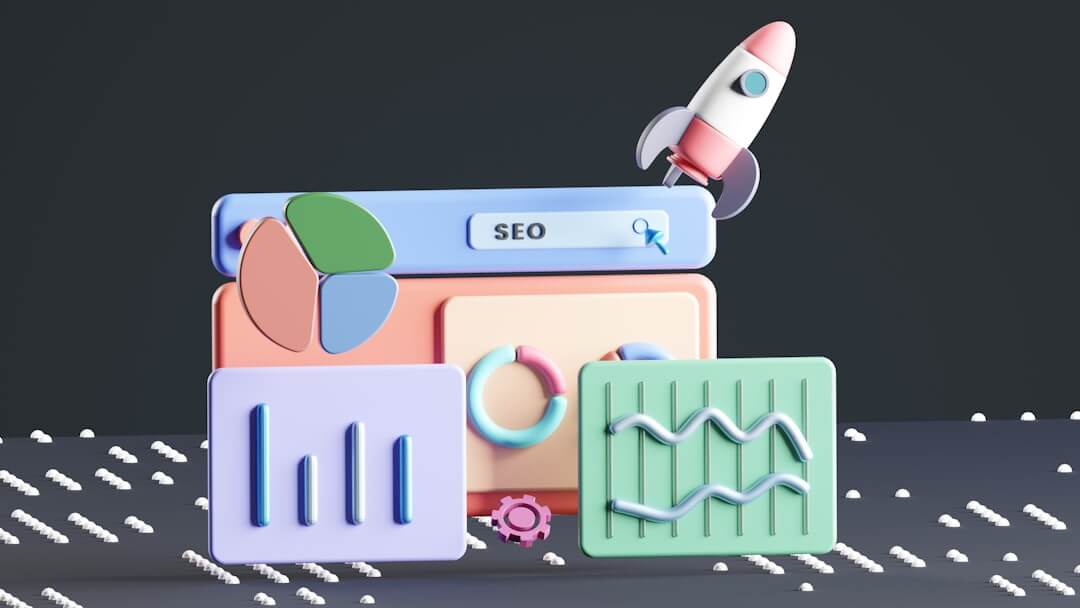 The strongest campaigns treat distribution as one channel, not the whole orchestra. In 2026, search visibility comes from the overlap between SEO, digital PR, entity building, and answer-ready content.
That overlap is where press releases still earn their keep. They create crawlable mentions, reinforce core brand facts, and give other channels a trustworthy source document to reference.
- SEO: branded search support, indexed mention pages, topical reinforcement
- AEO: clear summaries and factual formatting help AI retrieval systems
- Digital PR: release distribution can support wider outreach and credibility building
- Reputation management: more accurate public pages can improve what people find first
Independent SEO research backs the need for authority and clarity. Google’s own guidance prioritises helpful, reliable content, while sources like Ahrefs and Search Engine Journal regularly show that visibility comes from combined signals, not isolated tactics.
That is why distribution works best as part of a stack. Pair it with expert commentary, useful site content, strong landing pages, and a sensible media angle, and it becomes much more than a ceremonial PDF launch 🚀
What a realistic outcome looks like
 A realistic outcome is broader brand presence, not instant celebrity. You should expect a distribution report, publication examples, searchable mentions, and a stronger footprint around your announcement.
The best campaigns create momentum rather than one-off noise. That might mean easier sales conversations, cleaner branded search results, more trust during due diligence, and occasional secondary pickup from journalists or bloggers.
Brands using pricing and package options sensibly usually do better when they match the package to the importance of the announcement rather than buying visibility out of boredom.
If your goal is serious search and media traction, combine distribution with stronger on-site content and a follow-up outreach plan. Press release distribution services still work, but only when used with adult supervision.
Frequently Asked Questions
Do press release distribution services help with SEO?
Yes, but indirectly. They can support branded search visibility, create crawlable mentions, and reinforce entity signals, but they do not replace technical SEO, content strategy, or earned backlinks.
Are syndicated press release placements the same as editorial coverage?
No, they are different outcomes. Syndicated placements come from network distribution, while editorial coverage happens when a journalist or publication chooses to report on your story independently.
When should a company use press release distribution services?
Use them when you have real news. Product launches, funding, hiring, partnerships, milestones, and research announcements are all stronger use cases than generic brand promotion.
How much do press release distribution services usually cost?
Pricing varies widely by scope and support level. Publicly visible market examples range from $49 for basic packages to $479 for broader national-style distribution, with some annual media software plans costing $4,500 to $6,500.
Can a small business benefit from press release distribution?
Yes, if the announcement is credible and specific. Small businesses often benefit most when the release improves trust, branded search results, and sales proof rather than chasing vanity coverage.
Do press releases still matter in the age of AI search?
Yes, arguably more than before. AI systems look for consistent public information, and a well-structured release can act as a factual source that supports brand verification and answer retrieval.
What makes a press release distribution campaign fail?
Weak news angles cause most failures. If the story is vague, overhyped, or unsupported by facts, distribution simply increases the reach of a poor message.
Is distribution enough on its own for digital PR?
Usually not. Distribution is useful for scale and visibility, but stronger digital PR results come from combining it with outreach, expert commentary, and content worth citing.